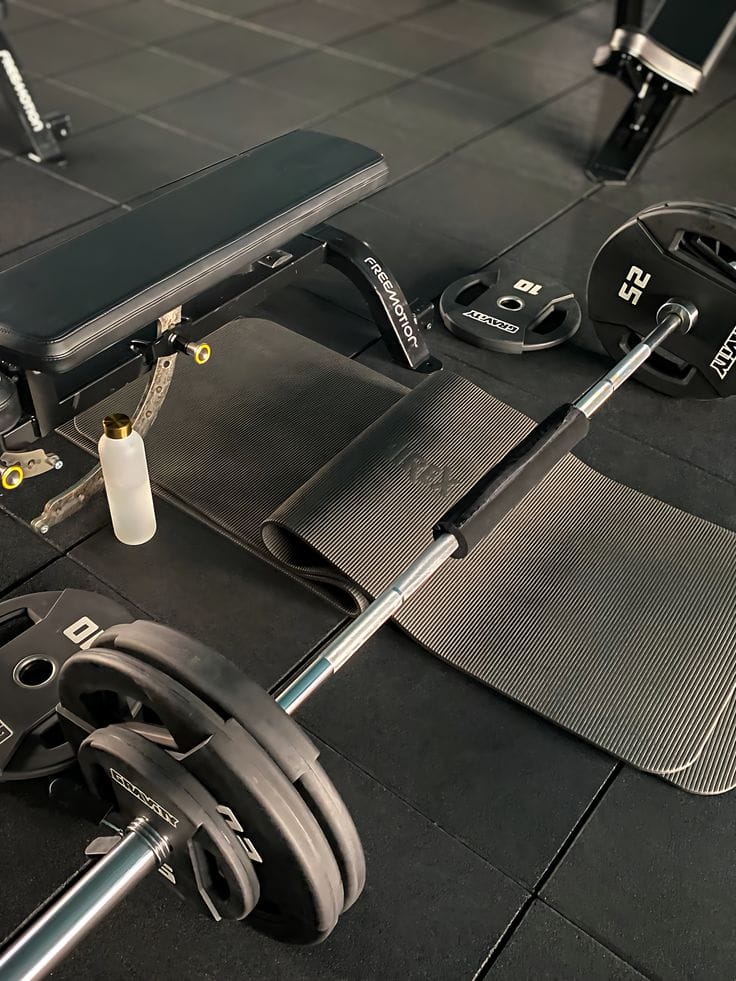
We dismantle every myth about women and heavy weights — the “bulking” fear, the “toning” obsession, the light-weight-high-rep fallacy — and show you exactly why progressive heavy resistance training is the single most powerful body transformation tool available to the female body.
Table of Contents
- The Truth About Women and Heavy Weights
- Busting the 5 Biggest Myths
- The Science: What Actually Happens When Women Lift Heavy
- 10 Proven Benefits of Heavy Lifting for Women
- Heavy Lifting vs. Cardio: Which Burns More Fat?
- How to Start Lifting Heavy: A Step-by-Step Guide
- A 4-Week Starter Program
- Nutrition for Women Who Lift Heavy
- Lifting Heavy After 40
- Frequently Asked Questions
- Conclusion
The Truth About Women and Heavy Weights
Walk into any commercial gym and you will see the same scene play out: men cluster around the squat racks and barbells while women cycle through ellipticals, resistance bands, and light dumbbell circuits. This is not an accident. Decades of fitness marketing, driven largely by fear — specifically, the fear of becoming “too bulky” — have steered women away from the one training method that would most reliably transform their physiques, protect their long-term health, and build the kind of functional strength that makes everyday life easier.
That method is progressive heavy resistance training. And the “bulky” fear keeping women away from it? It is one of the most stubborn, most harmful, and most scientifically unfounded myths in all of modern fitness.
This guide is your definitive resource. We cover the physiology, the research, the practical programming, and the nutrition so that you can walk into the weight room with complete confidence.
Busting the 5 Biggest Myths About Women Lifting Heavy
❌ MYTH 1: “Lifting heavy will make me look bulky like a man.”
✅ TRUTH: Women produce roughly 10–30 times less testosterone than men. Testosterone is the primary hormonal driver of large-scale muscle hypertrophy. Without pharmacological assistance, it is physiologically very difficult for women to build the kind of mass associated with male bodybuilders — even when training the same way. What heavy lifting actually does for women is reduce body fat, increase lean muscle, and create the “toned,” defined look most women say they want. The lean, athletic bodies of female sprinters, gymnasts, and powerlifters are built with heavy weights, not light resistance bands.
❌ MYTH 2: “Light weights and high reps ‘tone’ muscle without adding size.”
✅ TRUTH: “Toning” is not a physiological process. You cannot change the shape of a muscle fiber itself. What people call “toned” is the visual result of two things: increased muscle size and decreased body fat. High-rep, low-weight training is less efficient at achieving both compared to progressive heavy training. Muscles respond to sufficient mechanical tension — a stimulus that light weights simply do not provide at the level needed for meaningful body composition change.
❌ MYTH 3: “Cardio is better for fat loss than lifting.”
✅ TRUTH: Cardio burns calories during exercise, but that is largely where its fat-loss advantage ends. Heavy resistance training builds muscle tissue, which is metabolically active — meaning it burns more calories at rest, 24 hours a day, even while you sleep. This is called the resting metabolic rate (RMR) advantage, and it compounds over months and years in ways that steady-state cardio cannot match. Furthermore, heavy lifting triggers Excess Post-Exercise Oxygen Consumption (EPOC), sometimes called the “afterburn effect,” extending calorie burn for up to 38 hours after a session.
❌ MYTH 4: “Lifting heavy is dangerous for women.”
✅ TRUTH: When performed with proper technique and progressive programming, heavy resistance training has an extremely low injury rate — lower than many sports and comparable to recreational running. In fact, building strength through resistance training protects joints, improves bone density, and reduces the risk of injury in daily life. The danger is not in lifting heavy; it is in lifting with poor form, which applies equally to light and heavy loads.
❌ MYTH 5: “Women over 40 should stick to light, low-impact exercise.”
✅ TRUTH: Aging makes heavy resistance training more important, not less. After age 30, women begin losing 3–5% of muscle mass per decade — a condition called sarcopenia. This accelerates after menopause. Heavy lifting is the most effective intervention for reversing sarcopenia, maintaining bone density, improving hormonal balance, and preserving functional independence. Multiple peer-reviewed studies have demonstrated significant strength and body composition improvements in women who began lifting in their 50s, 60s, and beyond.
The Science: What Actually Happens When Women Lift Heavy
Understanding the physiology makes it much easier to commit to heavy training and trust the process. Here is what happens in your body when you consistently train with challenging resistance loads.
Hormonal Environment in Women
Female hormonal physiology fundamentally shapes how women respond to training. Estrogen — the primary female sex hormone — is actually anabolic, meaning it supports muscle protein synthesis and recovery. However, women’s testosterone levels (which average between 15–70 ng/dL, compared to 270–1,000 ng/dL in men) mean that the pathway to muscle growth is slower and the ceiling for total muscle mass is lower. This is why female athletes training for years in the same way as male athletes will not develop the same mass. It is not willpower, it is biology.
Muscle Fiber Recruitment
Lifting heavy loads activates a higher proportion of your muscle fibers — specifically the larger, more powerful Type II fast-twitch fibers. Lighter weights primarily engage the smaller, lower-output Type I fibers. For meaningful changes in strength and body composition, you need to recruit as many muscle fibers as possible, and that requires sufficient mechanical load. This is the fundamental physiological reason the light-weight-high-rep approach underperforms.
Progressive Overload: The Engine of Change
Progressive overload is the principle of gradually increasing the demand placed on your musculoskeletal system over time. This can mean adding weight to the bar, adding reps at the same weight, reducing rest time, or improving the quality and depth of movement. Without progressive overload, your body adapts to a given stimulus and stops changing. This is why women who do the same Pilates class or the same 5 kg dumbbell circuit for months plateau — the stimulus has become insufficient.
Bone Density and Connective Tissue
Resistance training places stress on bones, which responds by increasing bone mineral density (BMD). This is especially significant for women, who are at significantly higher risk of osteoporosis than men. The National Osteoporosis Foundation identifies weight-bearing and muscle-strengthening exercise as two of the most important modifiable factors for bone health. Heavy compound lifts — squats, deadlifts, hip hinges — load the spine and hips, the sites most commonly affected by osteoporotic fractures.
Metabolic Adaptation
Each pound of lean muscle tissue burns approximately 6 calories per day at rest, compared to roughly 2 calories per pound of fat. While these numbers seem small, the cumulative metabolic effect of adding even 5 pounds of muscle — entirely achievable for most women within 6–12 months of proper training — meaningfully raises your basal metabolic rate. Combined with the EPOC effect of heavy training, your body becomes a more efficient fat-burning machine around the clock.
10 Proven Benefits of Heavy Lifting for Women
- Increased lean muscle mass and a more defined physique. Muscle is denser than fat. Even at the same body weight, a woman with more muscle will wear a smaller clothing size and look more defined.
- Accelerated fat loss. Higher muscle mass means a higher resting metabolic rate, burning more calories even at rest.
- Stronger bones and reduced osteoporosis risk. Heavy loading is the most effective stimulus for increasing bone mineral density.
- Improved insulin sensitivity. Skeletal muscle is the largest site of glucose uptake. More muscle means better blood sugar regulation and reduced type 2 diabetes risk.
- Better hormonal health. Regular resistance training has been shown to improve hormonal balance, reduce cortisol levels, and positively influence menstrual cycle regularity.
- Reduced risk of injury. Stronger muscles and connective tissue better support and protect joints from everyday wear and acute injury.
- Improved cardiovascular health. Contrary to popular belief, heavy resistance training meaningfully improves cardiovascular markers including resting heart rate and blood pressure.
- Superior mental health outcomes. Multiple studies link resistance training to significant reductions in anxiety, depression, and stress. The sense of accomplishment from progressing in strength is uniquely powerful.
- Long-term functional independence. Strength built through heavy training preserves the ability to perform everyday tasks — carrying groceries, climbing stairs, getting up from the floor — far into older age.
- Dramatic improvements in body confidence. Nothing shifts self-perception quite like lifting a weight you could not have lifted six months ago. The psychological empowerment of building measurable physical capability is well-documented and profoundly significant for women.
Heavy Lifting vs. Cardio: Which Burns More Fat?
This is not really an either/or question — both modalities have their place — but the comparison deserves a clear-eyed look at the evidence.
| Factor | Steady-State Cardio | Heavy Resistance Training |
|---|---|---|
| Calories burned during session | Higher (typically) | Moderate |
| Post-exercise calorie burn (EPOC) | Minimal (1–2 hrs) | Significant (up to 38 hrs) |
| Effect on resting metabolic rate | Neutral to slightly negative (long-term) | Increases RMR |
| Muscle preservation during fat loss | Poor | Excellent |
| Bone density benefit | Minimal | Strong |
| Long-term body composition | Moderate | Superior |
| Hormonal benefit | Moderate | Strong |
💡 The optimal strategy: Heavy resistance training as your primary modality (3–4 days/week), supplemented with 1–2 cardio sessions for cardiovascular health and active recovery. This combination delivers superior fat loss, body composition, and health outcomes compared to cardio-only approaches.
How to Start Lifting Heavy: A Step-by-Step Guide
Step 1: Master the Fundamental Movement Patterns
Before chasing heavy numbers, develop competency in six foundational movement patterns. These are the building blocks of all effective strength training:
- Squat — goblet squat, barbell back squat, front squat
- Hip hinge — Romanian deadlift, conventional deadlift, kettlebell swing
- Horizontal push — bench press, dumbbell press, push-up
- Horizontal pull — dumbbell row, barbell row, cable row
- Vertical push — overhead press, Arnold press
- Vertical pull — lat pulldown, assisted or full pull-up
Step 2: Find Your Working Weight
For each movement, identify a weight that challenges you within the 6–12 rep range. A useful test: if you complete 12 reps and feel you could have done 5 or more additional reps comfortably, the weight is too light. Your last 2–3 reps in a set should feel genuinely difficult — requiring real effort and focus — while still being completed with good form.
Step 3: Apply Progressive Overload Every 1–2 Weeks
Once you can complete the top end of your rep range across all sets with good form, increase the weight by the smallest available increment. For upper body movements, this is typically 2.5–5 lbs. For lower body movements, 5–10 lbs. Progress does not need to be dramatic to be real.
Step 4: Prioritize Recovery
Muscle is built during recovery, not during the workout. Ensure you are getting 7–9 hours of sleep per night, consuming sufficient protein (0.7–1g per pound of bodyweight is a well-supported target), and taking at least one full rest day between training sessions for the same muscle group.
Step 5: Track Your Lifts
Keep a training log — even a simple notes app entry of weight, sets, and reps. Tracking is the single most effective way to ensure you are applying progressive overload consistently and to maintain motivation as you see objective evidence of your progress over time.
A 4-Week Starter Program for Women
This full-body program is designed for beginners to intermediate lifters. Perform it 3 days per week with at least one rest day between sessions (e.g., Monday / Wednesday / Friday). Rest 90–120 seconds between sets.
| Exercise | Sets | Reps | Notes |
|---|---|---|---|
| Goblet Squat | 3 | 8–10 | Hold dumbbell or kettlebell at chest. Keep chest tall. |
| Romanian Deadlift | 3 | 8–10 | Hinge at hips, soft knee bend. Feel stretch in hamstrings. |
| Dumbbell Bench Press | 3 | 8–12 | Control the descent. Full range of motion. |
| Single-Arm Dumbbell Row | 3 per side | 8–12 | Drive elbow toward hip. Avoid shrugging. |
| Overhead Press | 3 | 8–10 | Press directly overhead. Brace your core throughout. |
| Lat Pulldown | 3 | 10–12 | Drive elbows to hips. Slight lean back at the top. |
| Hip Thrust | 3 | 10–15 | Squeeze glutes hard at the top. Use a barbell once comfortable. |
| Plank or Dead Bug | 3 | 20–30 sec / 8 reps | Core anti-extension. Keep lower back neutral. |
⬆️ Progressive Overload Rule: When you can complete all reps across all 3 sets with good form, increase the weight by the smallest available increment at the next session. Never sacrifice form to lift more weight.
Nutrition for Women Who Lift Heavy
Training is the stimulus; nutrition is the raw material your body uses to respond to it. Without adequate nutrition, the gains you are working for will be severely limited.
Protein: The Non-Negotiable
Protein provides the amino acids your body uses to repair and build muscle tissue. For women engaged in regular heavy resistance training, the research consistently supports an intake of 0.7–1 gram of protein per pound of bodyweight per day. For a 140-pound woman, this means 98–140 grams of protein daily. High-quality sources include chicken breast, eggs, Greek yogurt, cottage cheese, lean beef, fish, tempeh, and legumes.
Carbohydrates: Fuel, Not the Enemy
Carbohydrates are your muscles’ preferred fuel source for high-intensity activity. Eliminating them while trying to build strength is counterproductive. Focus on whole-food carbohydrate sources — oats, sweet potatoes, rice, fruit, legumes — particularly around your training sessions. A small pre-workout meal containing both carbohydrates and protein will support your performance and recovery.
Caloric Intake: Body Composition Goals Matter
If your goal is fat loss: aim for a modest caloric deficit of 200–300 calories per day below your total daily energy expenditure (TDEE). Aggressive deficits impair recovery, reduce performance, and increase the likelihood of losing muscle alongside fat. If your goal is building muscle and strength: eat at or slightly above your TDEE to support tissue growth and performance. “Body recomposition” — losing fat while gaining muscle simultaneously — is achievable for beginners and those returning from a training break.
Hydration and Micronutrients
Women who train heavily should be particularly attentive to iron (heavy training increases demand), calcium and vitamin D (essential for the bone density benefits you are working to achieve), and magnesium (critical for muscle function and sleep quality). Aim for a minimum of 2–3 liters of water daily, more on training days.
Lifting Heavy After 40: Why It Becomes Even More Important
The physiological changes that accompany aging — particularly the hormonal shifts of perimenopause and menopause — make the case for heavy resistance training even more compelling for women in their 40s, 50s, and beyond.
Combating Sarcopenia
From approximately age 30 onward, women lose an average of 3–5% of muscle mass per decade. This rate accelerates significantly after menopause due to declining estrogen and testosterone levels. The result — weakness, reduced mobility, increased fall risk, and metabolic slowdown — is not inevitable. Progressive resistance training is the single most effective intervention for slowing and partially reversing this process.
Bone Health and Osteoporosis Prevention
Women lose bone mass rapidly in the years surrounding menopause, increasing fracture risk dramatically. Weight-bearing exercise — and specifically, heavy compound lifting — creates the mechanical stress necessary to stimulate bone remodeling and density maintenance. No medication produces comparable results when combined with consistent training.
Hormonal Benefits
Heavy resistance training has been shown to support healthier hormonal profiles in perimenopausal and postmenopausal women — including improving sleep quality, reducing hot flash severity, and supporting a healthier body composition during hormonal transitions.
Practical Considerations for Women Over 40
Recovery may take longer; schedule at least 48 hours between sessions targeting the same muscle groups. Warm-up becomes more important — invest 10–15 minutes in movement preparation before loading. Work with a coach or qualified trainer initially to ensure technique is sound. The weights should still be challenging; the principle of progressive overload does not change with age, but patience with the timeline does.
Frequently Asked Questions
Will lifting heavy weights make women look bulky?
No. Women have roughly 10–30x less testosterone than men — the hormone primarily responsible for large-scale muscle growth. Heavy lifting will make you leaner, more defined, and stronger, not bulky. The women you see in bodybuilding competitions who have very large muscle mass train specifically for that outcome over many years and often use pharmacological support. For the vast majority of women, heavy lifting produces an athletic, defined look.
How heavy should women actually lift?
“Heavy” is relative to your current strength level. The practical target is a weight that brings you to near-failure (1–2 reps left in the tank) within your working rep range of 6–12 reps. If you can easily complete 15 or more reps, the weight is not heavy enough to stimulate meaningful adaptation. Continuously challenge yourself and increase the load as you get stronger.
How many days a week should women lift heavy?
Three to four sessions per week is optimal for most women. This provides sufficient stimulus for muscle growth and strength development while allowing adequate recovery between sessions. Beginners can see excellent results with three full-body sessions per week.
Can women lift heavy while in a caloric deficit?
Yes, with appropriate expectations. Significant strength and muscle gains are harder to achieve in a deficit, but maintaining existing muscle — and even modest gains, especially for beginners — is entirely achievable. Ensure protein intake remains high (0.7–1g per pound of bodyweight) and that your deficit is modest rather than aggressive.
What about lifting during the menstrual cycle?
Your hormonal environment shifts across the four phases of your cycle, which can influence energy, strength, and recovery. During the follicular phase (post-period through ovulation), rising estrogen tends to support strength and performance — this is a great time to push for new personal records. The luteal phase (post-ovulation through menstruation) often brings reduced energy and recovery, where maintaining current weights and prioritizing sleep is sensible. Listening to your body throughout the month is always appropriate.
Is heavy lifting safe during pregnancy?
Women who were lifting regularly before pregnancy can often continue with appropriate modifications in the first and second trimester. However, this is a topic that requires individual assessment with your OB/GYN or a qualified prenatal fitness specialist. Do not begin a heavy lifting program for the first time during pregnancy.
How long before women see results from heavy lifting?
Neuromuscular adaptations — improvements in strength and coordination — begin within the first 2–4 weeks. Visible body composition changes typically become apparent within 8–12 weeks of consistent training and adequate nutrition. Significant, sustained transformation happens over 6–12 months and beyond. Patience combined with consistency is the formula.
Conclusion: The Weight Room Is for You
The evidence is unambiguous and overwhelming. Heavy resistance training is not just compatible with the female body — it is ideally suited to it. It builds the lean, strong, defined physique that many women spend years chasing with cardio and light weights. It protects against the diseases and physical limitations that claim so many women’s independence and quality of life as they age. And it delivers psychological benefits — confidence, resilience, embodied strength — that no other training modality matches.
The “bulking” fear was invented to sell women smaller weights, more cardio machines, and more expensive, less effective fitness products. The science has known for decades that it is a fiction.
Pick up something heavy. Add more weight next week. Repeat. Your body — and your future self — will thank you.
“Strong is not a look. It is a capability. And it is available to every woman willing to step up to the bar.”
